Expanding into Europe: an international recruitment checklist
 Priit Suitslepp
In 2024–2025, a noticeable shift has taken place in the expansion strategies of Estonian companies. While Finland and Sweden used to be the natural first step, today more businesses are looking toward Central and Eastern Europe (CEE) - and selectively toward Southern Europe.
This shift is not accidental. We see the same pattern in sales, exports, and most clearly in the labour market. There is demand. There is ambition. Yet growth increasingly stalls not because of market limitations, but because of a shortage of the right people. This is where international recruitment becomes a strategic decision rather than a tactical one.
Industry Is growing, but talent sets the limits
The industrial sector presents a paradox. There are more inquiries and orders than before, installation queues for machinery are long, and demand remains steady. At the same time, growth is constrained by two key factors: talent shortages and relatively low value added per employee.
Estonia’s industrial value added per employee remains significantly below the European Union average and the Nordic level. This is not solely an efficiency issue - it is also about ambition, market choices, and attracting the right people. International recruitment plays a critical role here, because sustainable growth does not come from pushing existing teams harder. It comes from making deliberate decisions about where to grow and who will drive that growth.
Scandinavia is no longer the first choice
Finland and Sweden remain important markets, but fewer companies now see them as the first expansion step. The reasons are clear: economic slowdown and gradual recovery, conservative investment behavior, long and cautious sales cycles, high labour costs, and lower risk appetite. Scandinavia requires maturity and patience. Companies seeking faster validation and quicker growth are increasingly looking elsewhere — and with that move, international recruitment becomes an unavoidable part of the expansion strategy.
The shift toward CEE markets
It is important to clarify that when we speak about moving “east,” we are not referring to Russia. We are referring to Central and Eastern Europe, where decisions are often made faster, growth is more visible, and labour markets are more flexible.
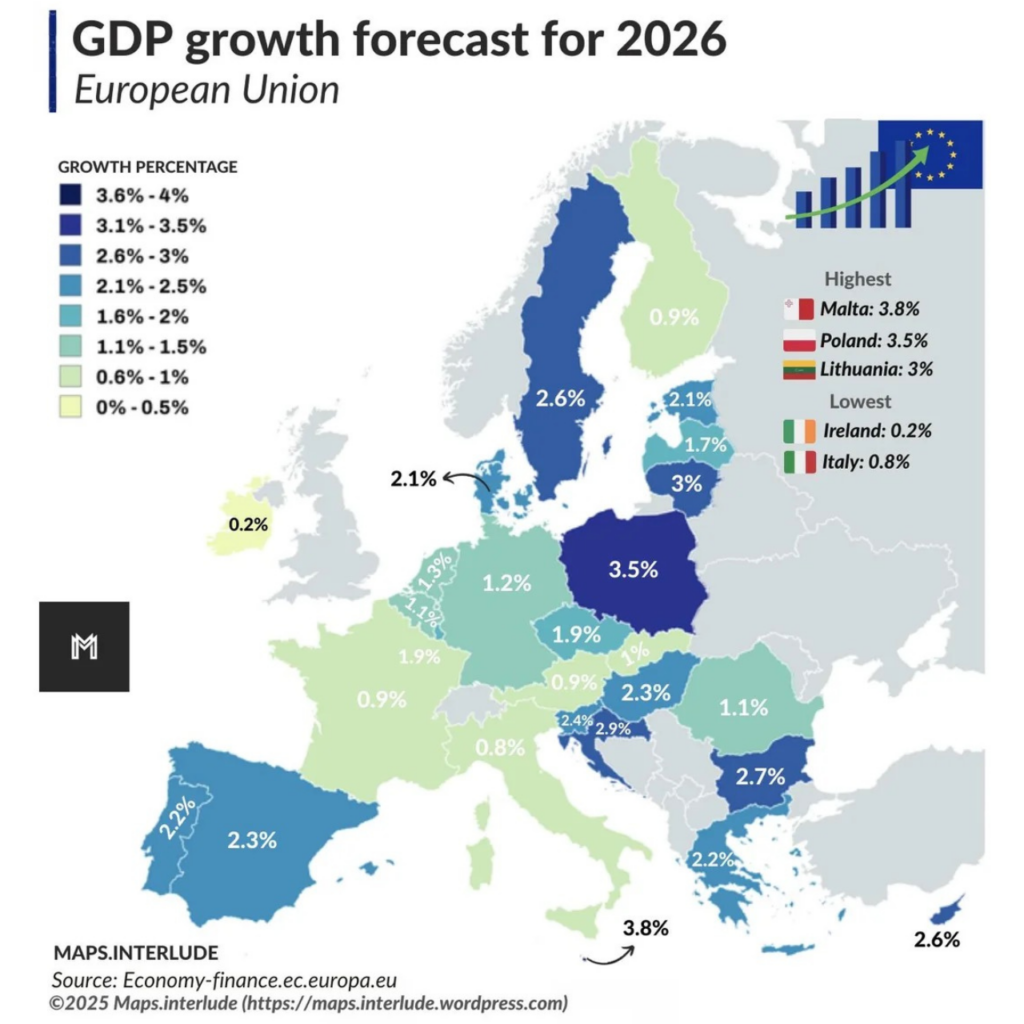
In 2024-2025, Poland stands out as a clear first-choice market. It offers a large domestic market, strong economic growth, active B2B sales behavior, and a significant industrial and logistics sector. For many Estonian companies, this means that international recruitment is no longer about testing the waters with one hire - it is about intentionally building a local sales or technical team.
The Czech Republic and Slovakia are well-suited for companies focused on technical quality and professional sales. Romania offers rapid growth and a large talent pool but requires a strong understanding of local culture and a long-term perspective. What unites all these markets is one simple truth: without well-executed international recruitment, even the best strategy remains unrealized.
International recruitment Is no longer only for large corporations
Previously, international recruitment was mainly associated with large multinational corporations. Today, it has increasingly become a growth tool for mid-sized Estonian companies as well. Estonia simply does not have enough sales and technical professionals with the required profiles. Existing teams are often overloaded, and growth does not wait for a “better time.” Meanwhile, CEE markets offer a larger pool of commercially active professionals, greater willingness to change jobs, and motivation driven not only by salary but also by development and responsibility.
The same role does not work the same way in every country
One of the most common mistakes in expansion is assuming that the same job description and offer will work across all markets. In reality, international recruitment must be adapted to local labour market expectations, cultural background, and prevalent sales and leadership styles. The most successful companies treat international recruitment as part of their business strategy - not as a separate HR project.
Turning ambition into growth
The expansion of Estonian companies has not stopped - but it is happening in different markets and under a different logic than before. Central and Eastern Europe currently offers more growth, speed, and flexibility than traditional Nordic markets. In this changing context, international recruitment has become the decision that determines whether ambition remains an idea or transforms into sustainable growth.
If you are entering new markets, you do not have to do it alone. It is wise to consult entrepreneurs or partners who have already gone through similar expansion. Their experience helps avoid costly mistakes, accelerate decisions, and reduce uncertainty. Entering a new market does not have to mean navigating in the dark — thoughtful international recruitment and the right advisory support turn expansion into a guided process rather than a trial-and-error journey.